
Artificial Intelligence: Role Engineering to Foster Active Reflection in Physics Problem Solving
Artificial Intelligence: Role Engineering to Foster Active Reflection in Physics Problem Solving
Date: February 23 2026
On 23 February 2026, the AI Society at the University of Padua hosted a seminar by Dr. Eugenio Tufino (University of Modena and Reggio Emilia), exploring innovative approaches to designing AI tutors for physics education.
The seminar focused on role engineering—the practice of configuring large language models to adopt specific pedagogical behaviors. Through practical examples based on Gemini Gems, participants learned how generative AI can be designed to act as a tutor that encourages Socratic dialogue, metacognitive reflection, and independent problem solving, rather than simply providing answers.
Particular attention was devoted to the design of effective tutoring strategies, including the use of guiding questions, structured feedback, and explicit reasoning steps to promote deeper student understanding.
The seminar also addressed the current limitations of AI technologies, emphasizing the importance of human oversight in education and discussing emerging approaches such as Retrieval-Augmented Generation (RAG) for building specialized AI systems to support scientific reasoning.
Building on the Fall School and previous faculty workshops, this seminar provided participants with an advanced perspective on the future of AI-assisted learning environments in physics education.
conference speakers
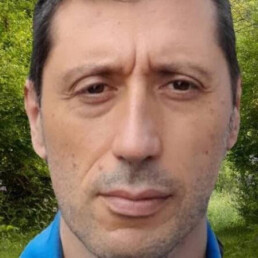
Dr. Eugenio Tufino
Dr. Eugenio Tufino is a Tenure-Track Researcher in Physics Education at the University of Modena and Reggio Emilia (UNIMORE). His research focuses on physics education, active learning, computational methods, and the integration of artificial intelligence into physics teaching.

Intelligenza artificiale nella didattica: Strumenti, pratiche e scelte pedagogiche
Intelligenza artificiale nella didattica: Strumenti, pratiche e scelte pedagogiche
Date: October 31 2025 - at 11.00 AM (Italian time)Where: Aula P1B, Complesso Paolotti
L’integrazione di una nuova tecnologia nella didattica richiede una riflessione critica che coniughi conoscenza degli strumenti e consapevolezza delle scelte pedagogiche. Come possiamo, da docenti, usare l’Intelligenza Artificiale (IA) con un pensiero didattico informato, progettando attività e materiali efficaci e coerenti con i nostri obiettivi formativi?
Esploreremo il tema attraverso una coppia di seminari con taglio pratico.
L’incontro ha anche lo scopo di creare le basi per una Faculty Learning Community di docenti del DFA che desiderano sperimentare con l’IA, nell’ambito del Progetto di Miglioramento della Didattica 2024.
conference speakers
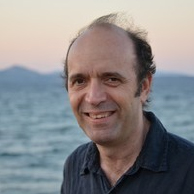
Carlo Mariconda
Professore ordinario di Matematica e Advisor di Ateneo per la Didattica Digitale, condividerà esempi ed esercizi con strumenti di IA che possono essere utilizzati dal personale docente UniPD e proporrà una riflessione sulla valutazione.

Ottavia Trevisan
Ricercatrice FISPPA nell’ambito delle tecnologie per la didattica, offrirà cornici pedagogiche e una riflessione educativa utili a orientare le scelte didattiche, in dialogo con il prof. Gerald Kzenek (University of North Texas), ospite del suo gruppo di ricerca.
PER-Grounded Faculty Learning Community
PER-Grounded Faculty Learning Community
Date: December 16 2024 - from 4.30 PM to 5.30 PM (Italian time)Where: Aula P4C, Complesso Paolotti
The primary goal of physics teaching is to educate human beings to science and its nature. However, as technology continues to evolve, artificial intelligence (AI) is gaining prominence not only in technical and scientific domains but also in education. Recently, the rise of AI has sparked both concern and enthusiasm among educators, affording new opportunities and challenges for teaching and learning.
As we navigate this fast-evolving landscape, several questions arise: What competences, practices, and aspects of human development do we aim to foster, and how does the availability of AI-based systems impact their teaching and learning? How should we, as educators, frame AI-based systems and our – and our students’ – interactions with them? Is it even possible to “collaborate” with AI in meaningful ways? The panelists, all experts in physics education research, will bring a variety of expertise and perspectives, from technical considerations to ethical implications.
conference speakers
Magdalena Kersting
Department of Science Education, University of Copenhagen
Olivia Levrini
Dipartimento di Fisica e Astronomia “Augusto Righi”, University of Bologna
Giulia Polverini
Department of Physics and Astronomy, Uppsala University
Christopher Robin Samuelsson
Department of Physics and Astronomy, Uppsala University