

Artificial Intelligence: Role Engineering to Foster Active Reflection in Physics Problem Solving
Artificial Intelligence: Role Engineering to Foster Active Reflection in Physics Problem Solving
Date: February 23 2026
On 23 February 2026, the AI Society at the University of Padua hosted a seminar by Dr. Eugenio Tufino (University of Modena and Reggio Emilia), exploring innovative approaches to designing AI tutors for physics education.
The seminar focused on role engineering—the practice of configuring large language models to adopt specific pedagogical behaviors. Through practical examples based on Gemini Gems, participants learned how generative AI can be designed to act as a tutor that encourages Socratic dialogue, metacognitive reflection, and independent problem solving, rather than simply providing answers.
Particular attention was devoted to the design of effective tutoring strategies, including the use of guiding questions, structured feedback, and explicit reasoning steps to promote deeper student understanding.
The seminar also addressed the current limitations of AI technologies, emphasizing the importance of human oversight in education and discussing emerging approaches such as Retrieval-Augmented Generation (RAG) for building specialized AI systems to support scientific reasoning.
Building on the Fall School and previous faculty workshops, this seminar provided participants with an advanced perspective on the future of AI-assisted learning environments in physics education.
conference speakers
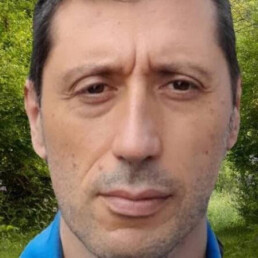
Dr. Eugenio Tufino
Dr. Eugenio Tufino is a Tenure-Track Researcher in Physics Education at the University of Modena and Reggio Emilia (UNIMORE). His research focuses on physics education, active learning, computational methods, and the integration of artificial intelligence into physics teaching.

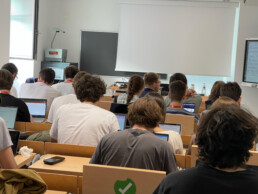
Fall School 2025: Generative Artificial Intelligence & Problem Solving in Physics
Fall School 2025: Generative Artificial Intelligence & Problem Solving in Physics
25-26 September 2025
On 25–26 September 2025, the AI Society at the University of Padua organized the Fall School “Generative Artificial Intelligence – Problem Solving in Physics”, an intensive two-day educational initiative designed for students enrolled in the Bachelor’s Degree in Physics.
The Fall School represented the Society’s flagship training activity for physics students, combining theoretical lectures, hands-on workshops, guided exercises, and interactive discussions. The program introduced participants to the foundations of generative artificial intelligence and explored its practical use as a tool for scientific reasoning and problem solving.
Throughout the two days, students worked on topics including:
- The principles behind modern generative AI models;
- Effective prompting techniques for scientific applications;
- The use of AI systems to support physics problem solving;
- Comparative analysis of different large language models;
- Critical evaluation of AI-generated solutions;
- Methodological and epistemological limitations of generative AI.
A distinctive feature of the Fall School was its strong emphasis on experiential learning. Rather than simply introducing AI technologies, participants were encouraged to experiment directly with multiple AI models, compare their behavior, identify strengths and weaknesses, and reflect on when AI can effectively support scientific reasoning—and when human expertise remains essential.
Prior to the event, an open communication campaign introduced the initiative to the student community, presenting it as a pilot project aimed at developing advanced AI competencies that could later be extended to a broader audience within the University.
Participation was based on an open application process. The School was offered free of charge, required no prior experience with artificial intelligence, and was designed to be fully inclusive. Learning activities were adapted to participants with different backgrounds, and no personal software licenses or specialized hardware were required. At the end of the program, participants received a certificate of attendance recognizing the competencies acquired during the School.
The Fall School demonstrated how generative AI can become a valuable educational companion for physics students—not as a replacement for scientific thinking, but as a tool to enhance problem-solving skills, stimulate critical analysis, and promote a deeper understanding of physical concepts through active exploration.

Artificial Intelligence for Teaching Physics
Artificial Intelligence for Teaching Physics
Date: December 17 2025 - at 8.30AM (Italian time)Where: Aula P4C
SERIES OF TWO SEMINARS
This seminar will start from introducing the Technology Acceptance Model (TAM) to evaluate how generative AI (GenAI) is perceived and used by students and teachers. Through a series of physics problems, we will test and discuss the ability of GenAI systems for physics teaching and learning. The seminar also reviews institutional guidelines (comparing Imperial College and Padova) for ethical AI use. It concludes with survey data showing that while students use AI for coding and brainstorming, they are highly uncomfortable with AI being used for automated marking or replacing personalized feedback from lecturers.
conference speakers
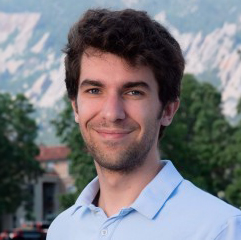
Michael Fox
Michael F.J. Fox is Head of Teaching Labs in the Physics Department at Imperial College London. His work focuses on how students learn in physics labs and how to teach experimental physics effectively. He also studies curriculum and culture change, and he is involved in a variety of projects aimed at exploring the use of generative AI and machine learning in higher education.
Artificial Intelligence for Physics Education Research
Artificial Intelligence for Physics Education Research
Date: December 17 2025 - at 10.30AM (Italian time)Where: Aula P4C
SERIES OF TWO SEMINARS
This seminar provides a comprehensive overview of how Machine Learning (ML) and Natural Language Processing (NLP) are used to analyze both quantitative and qualitative data in physics education. After briefly tracing the history of text analysis from traditional “bag-of-words” classifiers to the current era of Large Language Models (LLMs), the seminar will focus on recent developments and uses in Physics Education Research. Specifically, it will present the use of LLMs to automate the coding of student lab notebooks, comparing the performance of different models against human inter-rater reliability.
conference speakers
Michael Fox
Michael F.J. Fox is Head of Teaching Labs in the Physics Department at Imperial College London. His work focuses on how students learn in physics labs and how to teach experimental physics effectively. He also studies curriculum and culture change, and he is involved in a variety of projects aimed at exploring the use of generative AI and machine learning in higher education.
Intelligenza artificiale nella didattica: Strumenti, pratiche e scelte pedagogiche
Intelligenza artificiale nella didattica: Strumenti, pratiche e scelte pedagogiche
Date: October 31 2025 - at 11.00 AM (Italian time)Where: Aula P1B, Complesso Paolotti
L’integrazione di una nuova tecnologia nella didattica richiede una riflessione critica che coniughi conoscenza degli strumenti e consapevolezza delle scelte pedagogiche. Come possiamo, da docenti, usare l’Intelligenza Artificiale (IA) con un pensiero didattico informato, progettando attività e materiali efficaci e coerenti con i nostri obiettivi formativi?
Esploreremo il tema attraverso una coppia di seminari con taglio pratico.
L’incontro ha anche lo scopo di creare le basi per una Faculty Learning Community di docenti del DFA che desiderano sperimentare con l’IA, nell’ambito del Progetto di Miglioramento della Didattica 2024.
conference speakers
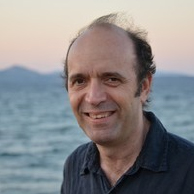
Carlo Mariconda
Professore ordinario di Matematica e Advisor di Ateneo per la Didattica Digitale, condividerà esempi ed esercizi con strumenti di IA che possono essere utilizzati dal personale docente UniPD e proporrà una riflessione sulla valutazione.

Ottavia Trevisan
Ricercatrice FISPPA nell’ambito delle tecnologie per la didattica, offrirà cornici pedagogiche e una riflessione educativa utili a orientare le scelte didattiche, in dialogo con il prof. Gerald Kzenek (University of North Texas), ospite del suo gruppo di ricerca.

Artificial Intelligence and Physics Education – ongoing projects at Imperial College London
Artificial Intelligence and Physics Education – ongoing projects at Imperial College London
Date: April 14 2025 - at 11.15 AM (Italian time)Where: Aula P1A, Complesso Paolotti
Imperial College London has invested in a variety of projects to explore the use of generative artificial intelligence (GAI) and machine learning (ML) in higher education The main project which I will discuss aims to test the effectiveness of Large Language Models (LLMs) in assisting large-scale qualitative research and consequently whether workflows incorporating LLMs can provide useful and timely feedback to instructors on the impact of their teaching. The focus of the work is on student use of scientific argumentation in lab reports. We have constructed a codebook for scientific argumentation to identify elements of argumentation, the relationships between those elements, and their veracity. Through building a training dataset of over 250 lab reports from students in their first- and second-year lab courses, we aim to analyse the whole set of 1899 lab reports from two cohorts of students by utilizing fine-tuning of open-source LLMs to automate the coding process (Fussell et al., 2025). The specific purpose here is to test how changes to teaching between the two cohorts affected students’ scientific argumentation skills, and, therefore, help us to evaluate the impact of the changes.
In addition to this, I will provide an overview of the projects that are currently being undertaken across Imperial related to AI and education. These institutionally funded projects include: (1) the use of GAI in providing feedback to students through the in-house problem sheet web-interface Lambda Feedback; (2) the use of LLMs to analyse and provide in-the-moment feedback to students on the structural elements of their lab reports; (3) using ML to identify at-risk students through analysis of interaction data from Lambda feedback; and (4) collecting data on students’ views about how instructors use GAI in their teaching.
conference speakers
Michael Fox
Michael has worked on a wide range of projects in physics education research, from workforce development for the quantum industry through to analysis of the process of curriculum and culture change in a physics department. His core interest is in what and how students learn in physics teaching laboratories. This has been informed by his own experience as a student in undergraduate teaching labs through to his PhD research on analysing data on plasma turbulence in nuclear fusion reactors. How to teach experimental physics effectively came to the forefront when he was teaching high-school physics, leading to post-doctoral work on assessing student learning in teaching labs using the E-CLASS and MAPLE surveys during his time in the Lewandowski group in Boulder, Colorado. He has recently been appointed as the head of the teaching laboratories in the Department of Physics at Imperial College London, where he has started to implement evidence-based practices.
PER-Grounded Faculty Learning Community
PER-Grounded Faculty Learning Community
Date: December 16 2024 - from 4.30 PM to 5.30 PM (Italian time)Where: Aula P4C, Complesso Paolotti
The primary goal of physics teaching is to educate human beings to science and its nature. However, as technology continues to evolve, artificial intelligence (AI) is gaining prominence not only in technical and scientific domains but also in education. Recently, the rise of AI has sparked both concern and enthusiasm among educators, affording new opportunities and challenges for teaching and learning.
As we navigate this fast-evolving landscape, several questions arise: What competences, practices, and aspects of human development do we aim to foster, and how does the availability of AI-based systems impact their teaching and learning? How should we, as educators, frame AI-based systems and our – and our students’ – interactions with them? Is it even possible to “collaborate” with AI in meaningful ways? The panelists, all experts in physics education research, will bring a variety of expertise and perspectives, from technical considerations to ethical implications.
conference speakers
Magdalena Kersting
Department of Science Education, University of Copenhagen
Olivia Levrini
Dipartimento di Fisica e Astronomia “Augusto Righi”, University of Bologna
Giulia Polverini
Department of Physics and Astronomy, Uppsala University
Christopher Robin Samuelsson
Department of Physics and Astronomy, Uppsala University

Modelling of brain stimulation to unveil signal propagation and network dynamics
Modelling of brain stimulation to unveil signal propagation and network dynamics
Date: December 13 2023 - at 2.45 PM (Italian time)Where: Aula Magna del VIMM, Via Giuseppe Orus, 2, 35129 Padova PD
The human brain comprises distinct resting-state networks (RSNs) characterized by spontaneous activity patterns. Despite this highly structured functional pattern, its laws of motion and principles of organization have proven challenging to understand with currently available measurement techniques. In such epistemic circumstances, an extremely elegant modus operandi to investigate brain complexity with high spatial and temporal resolution entails the administration of precise and synchronized external stimulation, followed by a meticulous examination of the resulting induced propagation dynamics that emerge in response to these perturbations. In this framework, a combination of empirical stimulus-evoked data analyses and whole-brain, connectome-based neurophysiological modelling provide an elegant scaffold to investigate questions around the physiological basis and spatiotemporal network dynamics of RSNs’ activity. Deciphering this evoked propagation pattern is essential for a comprehensive understanding of the brain’s response to stimulation and therefore for personalized and targeted interventions, with potential applications ranging from therapeutic treatments to cognitive enhancement. Dr. Momi will also give a more technical lectures about the mathematical modelling and computational pipelines for the students of Physics of Data on Thursday 14 December at 2.30 pm, in P2B room, Paolotti building. This lecture are open also for PNC Ph.D. students.
conference speakers

Davide Momi
Davide is a second year Post-Doctoral Research Fellow at Krembil Centre for Neuroinformatics (Toronto). He completed his Ph.D. at the Department of Neuroscience, Imaging and Clinical Sciences at the University of Chieti. As part of his PhD, Davide attended a period abroad at the Martinos Center for Biomedical Imaging in Boston. Prior to his doctoral studies, he obtained a Master’s degree in “Neurosciences and Neuro-Psychological Rehabilitation” from the University of Bologna and a Bachelor’s in “Psychology” from the University of Perugia. Davide has experience with multimodal neuroimaging and electrophysiological data, brain stimulation, quantitative structural MRI assessment, machine learning, simulations of macroscale brain dynamics. His research is mainly focused on personalized simulations of brain dynamics to provide a better understanding of neurological and psychiatric disorders.

The transformers revolution: how an algorithm shaped the current AI landscape and society
The transformers revolution: how an algorithm shaped the current AI landscape and society
Date: November 8 2023 - at 4.30 PM (Italian time)Where: Aula Rostagni, Physics and Astronomy Dept, Via Paolotti 9, 35131, Padova
The original Transformers architecture by Vaswani et al. dates only to 2017. In a very short time, it revolutionized our understanding of the capabilities of Artificial Intelligence. This session explores how this idea revolutionized natural language processing, enabling machines to comprehend and generate human-like text. From their inception to contemporary applications, we elucidate the profound influence of Transformers in diverse fields, including chatbots, and multimodal content generation. We investigate the societal effects, scrutinizing the ethical implications, biases, and job market transformations induced by this technology.
conference speakers
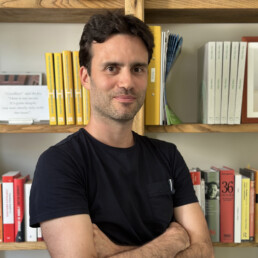
Carlo Nicolini
Carlo Nicolini, PhD is currently Senior Scientist at Ipazia SpA, a company of artificial intelligence services for industry and banks. After completing a PhD in applied physics focused on community detection in brain fMRI networks, he pursued postdoctoral studies exploring the statistical physics of complex systems. His research spanned various fields, including neuroscience and finance. Transitioning to industry, he joined a leading data science consulting firm in Italy, where he served as a senior analyst in the financial services sector. He is the creator of scikit-portfolio, a library for financial portfolio optimization. Currently, his research interests lie at the crossroads of deep learning, statistical physics, and finance.
From the Transformer architecture to ChatGPT
From the Transformer architecture to ChatGPT
Date: October 17, 2023 - at 4.30 PM (Italian time)Where: Aula Voci, Physics and Astronomy Department, Via Francesco Marzolo 8, 35131, Padova
Large Language Models (LLMs) have risen to prominence in recent years thanks to their ability to accurately model human Natural Language, solve reasoning tasks and effectively assist humans in several tasks via a chat interface.
In my talk I will introduce the core neural network architecture behind LLMs, the Transformer. I will further present the main line of research and insights that lead to the successful scaling of Transformer Language Models up to hundreds of billions of parameters. Finally I will relate the main ideas that let us turn a Large Language Model into a useful language assistant such as ChatGPT.
conference speakers

Nicola Dainese
Nicola Dainese graduated in Physics of Data in 2020. He is now PhD Candidate in Computer Science (Deep Learning and Artificial Intelligence) at Aalto University, Finland. His expertises are reinforcement learning and language models.